
Legacy · Aug 2026
Featured profiles exploring how athletes build wealth beyond sports.
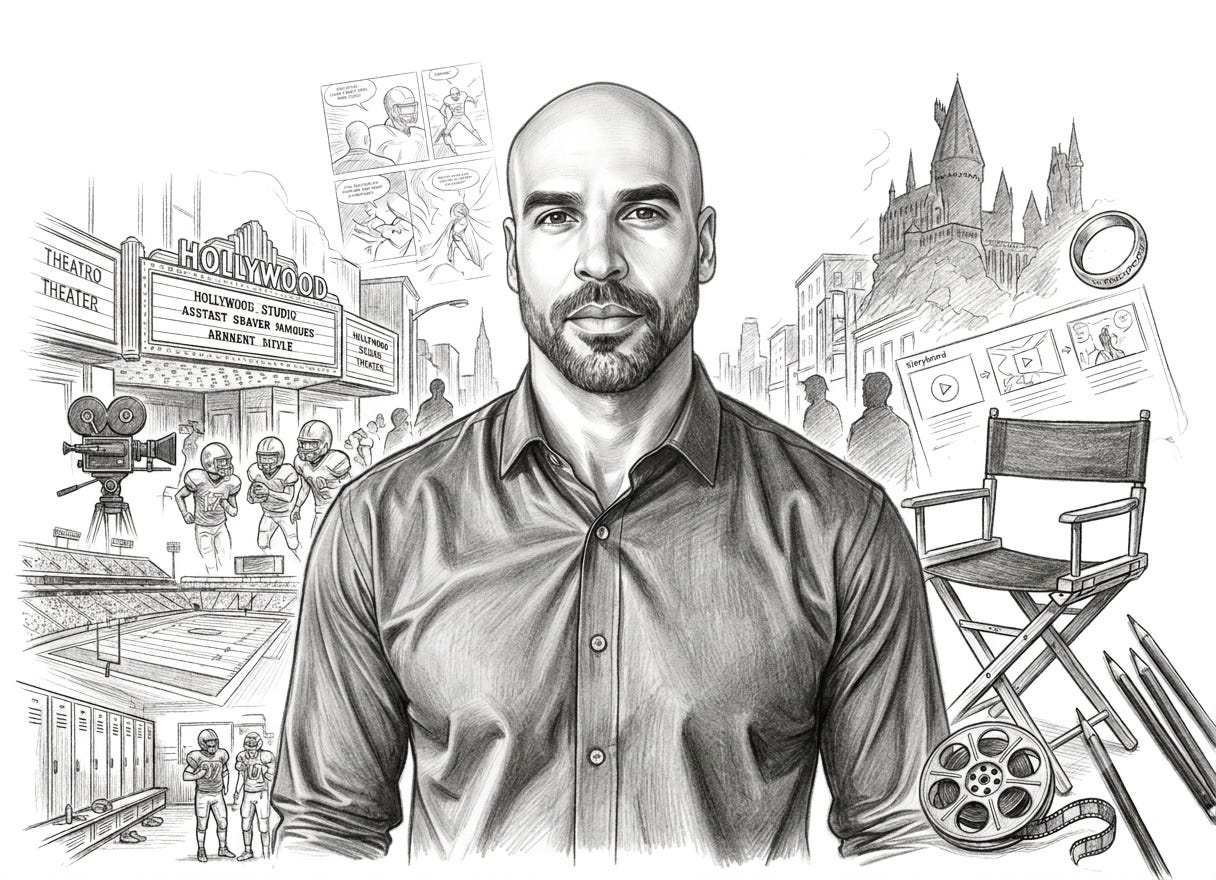
There is a version of career risk-taking that Silicon Valley has made almost fashionable: the engineer who leaves a stable job to chase a startup with a ninety-nine percent chance of failure. Matt Singletary took a version of that bet. The odds were probably worse.
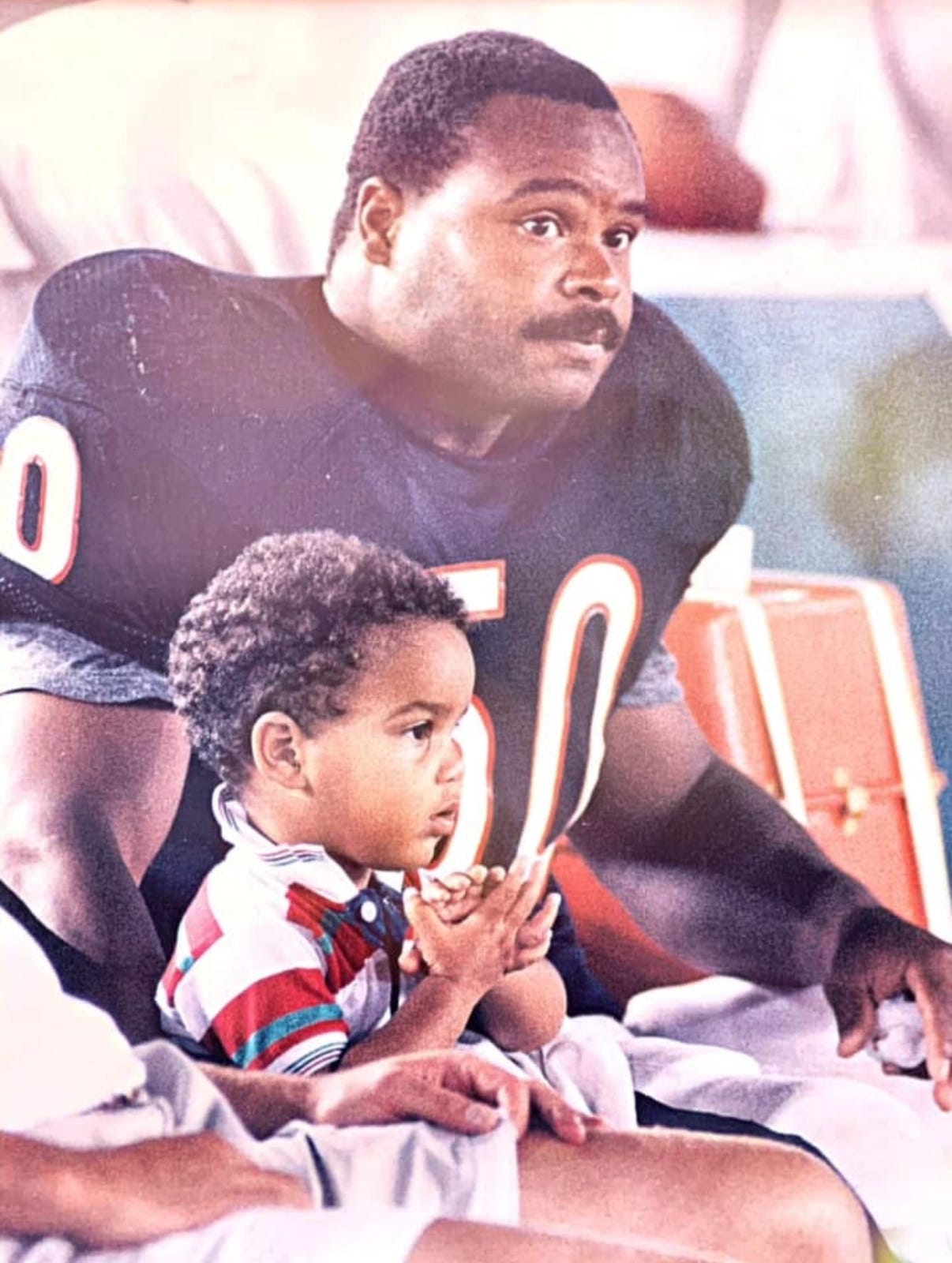
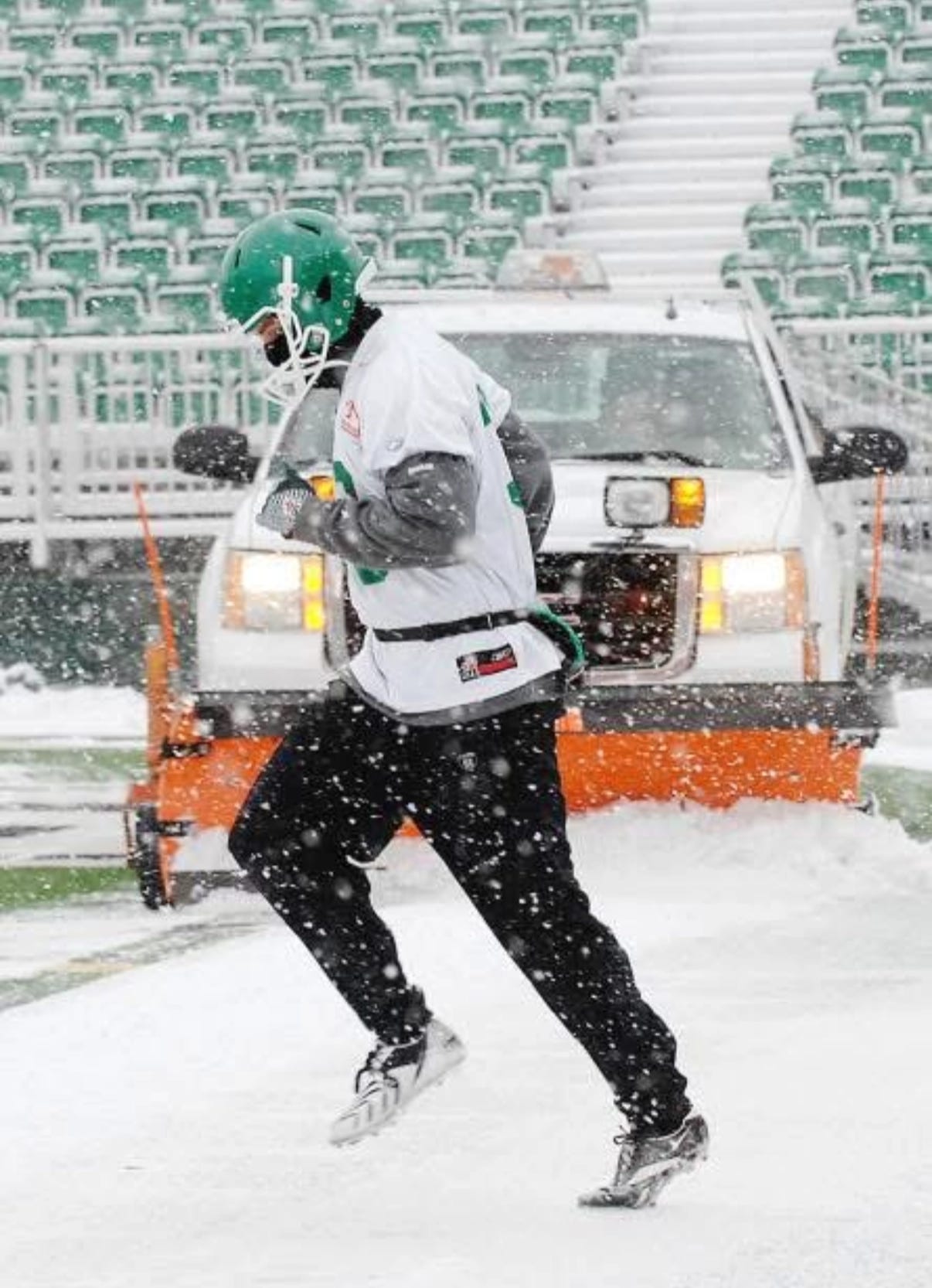
Matt’s father is in the Pro Football Hall of Fame. For most of his life, it felt less like an inheritance and more like an audit. Every snap, every game, every season invited comparison to one of the greatest linebackers the game has ever seen. He played through college and briefly in the NFL and CFL before football ended the way it does for most players, abruptly, and on someone else’s schedule.
Most people would enter their next chapter staying close to the game. Matt chose to leave it all behind.
He moved to Los Angeles to start over in an industry where he had no experience, no relationships, and no obvious advantage - except for a lifelong obsession with comics and anime, a side of himself he’d spent most of his childhood keeping quiet.
But what makes Matt’s story interesting isn’t the transition itself. Plenty of athletes reinvent themselves. It’s the mindset behind it. He approached acting less like a second act and more like a search for product-market fit - testing, learning, refining until something finally clicked. Mark Ruffalo’s advice, that one role might come from every hundred auditions, became a useful benchmark. Every “no” became another step toward the inevitable “yes.”
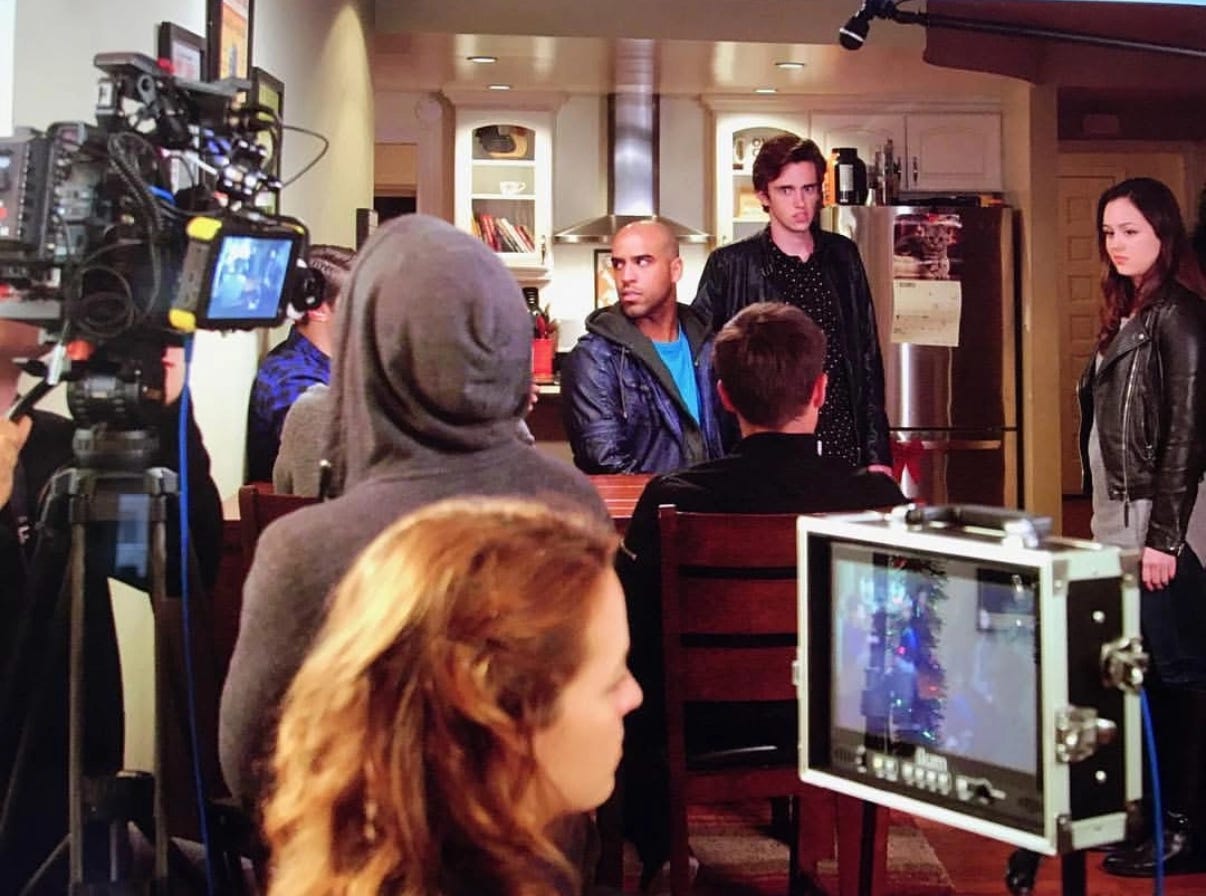
Eventually, the work began to compound. He appeared on Chicago P.D., worked with Hugh Laurie in Chance, landed a lead role in the film Hood, and wrote and starred in one of the earliest athlete-led YouTube series, years before “creator economy” became a category of its own.
I sat down with him to talk about the weight of carrying a Hall of Fame last name every time he stepped onto a football field, the unlikely path from football to Hollywood, and the mindset he developed along the way - one that now shapes far more than his acting career.
This Q&A has been lightly edited for clarity and length.
Your dad is a Hall of Famer - someone whose name carries weight with anyone who follows the NFL. How did that shape the way you approached the game?
Matt: Honestly? I was scared to play. I felt like I was growing up in a Hall of Famer and NFL coach’s shadow, and that I had to earn my last name.
My dad played twelve years. Ten trips to the Pro Bowl. All-Pro. Hall of Fame. Anything short of that would’ve been a failure.
There was a part of me that was excited too, but I knew I’d get compared to my dad no matter what I did, and that usually won out.
Early on, I wouldn’t even let myself find out if I loved football. I played hockey, baseball, basketball, soccer, water polo, anything that wasn’t football, just so I wouldn’t have to face it.
Eventually, the thinking became: if I’m going to get compared to him anyway, I might as well find out if I even like this thing.
At first, the fear was I hope people think I’m good enough. It was about external validation. Over time it turned inward, and got heavier: what if I don’t even think I’m good enough. That’s the harder version. I actually preferred when it was about other people. Because that one’s easier to live with.
At what point did you realize the real question wasn’t whether you could keep playing, but whether you wanted to?
It happened in one of those quiet moments, probably on the floor of a shower, which became a habit for me. Lights off, water running, some Hans Zimmer on repeat. That was how I’d shut everything out.
It did take me a while to ask that question. Life just kept presenting the next step, and I took it, without processing whether I actually wanted it. Some of that was a trap of my own making. Every year I played, these questions would be running in the background. If I quit, would people think I gave up? Would people respect it if I didn’t want to play anymore? I never had clean answers to these, but they were a big part of why I kept playing.
Most career transitions happen between adjacent worlds. Football to Hollywood isn’t one of them. Where did that ambition come from, and what gave you the conviction that it was a bet worth making?
I was a nerd who happened to play sports. Comics, anime, Harry Potter, Tolkien, I was excited about all of it. What I loved about those worlds was that they gave me somewhere else to go.
Growing up, I struggled to fit in. I got bullied. Back then, they offered an exit. I remember reading my first Harry Potter book in fifth grade, and it completely rearranged something in me. I was in Chicago, but I was also at Hogwarts.
So there was always this quiet thought underneath everything: I have so many stories in my head. What if I could make them?
“The worst day I ever had on set was still better than my best day in football.”
One day, I met a guy, JT Neal, who’d been doing some acting work. We saw Straight Outta Compton together, and it hit both of us the same way, watching Ice Cube, Dr. Dre, Eazy-E just decide to build something themselves. We walked out of that theater and said, what if we just did our own thing? We didn’t know how to write at the time, so we got a few MasterClass subscriptions and started learning. Our first scripts were terrible. Then they got a little less terrible.
By the time I had to decide whether to commit to this, I already knew what the alternative looked like. I had a corporate job after football ended, doing spreadsheet work I didn’t really understand, and there was an older guy training me on Excel who told me, “One day you’ll look back on this and laugh, you’ll know this stuff like the back of your hand, just like me.” I remember thinking - I don’t want this, I don’t want to become you.
I wasn’t running the math on my odds in the industry. I just knew the bad days here beat the best days over there. Once I realized that, it stopped being a risk I had to talk myself into.

In what ways is Hollywood similar to, or different from, football?
“Hollywood and football both reward versatility.”
The overlaps are obvious once you see it.
The more you can do, the more valuable you are. A long snapper who can also block and catch is more valuable than one who only snaps. A lineman who can play center and guard has a longer career than one who only knows one position. It’s the same instinct that made me want to show range as an actor instead of getting boxed into one type.
Another similarity is that you’re allowed to experiment and fail, as long as it happens somewhere safe. In football, that’s a practice rep. In acting, that’s the auditions.
But you can only take those risks responsibly if you’ve actually studied. As a defensive end, I can’t gamble on a cutback lane if I don’t know the defense. During an audition, I can’t improvise a scene if I don’t know how the director likes to operate.
Every director in Hollywood is basically a different defense you have to study. Someone like Aaron Sorkin or Quentin Tarantino wants every word delivered exactly as written, no improvising. Whereas other directors might hand you three words on a page and say go. Knowing which one you’re working with before you walk on set is its own skill.
At 6’4” with an athletic background, it would’ve been easy for Hollywood to put you in one box. How intentional were you about avoiding being typecast?
Not at the start, because you can’t afford to be. My first real role was on Chicago P.D. It was basically, “you want to play a cop?” And the answer was yes, because it got me on camera.
Part of why JT and I wanted to build our own stuff eventually was exactly this. The industry looks at a big guy and sees “cop” or “security guard.”
My personal cheat code is you show as many sides of yourself as you can, as often as you can. The audition is the one place I get to create on my own terms. Even in a role written as “no-frills cop,” it’s my shot to show range. I’m not just auditioning for the role in front of me. I’m auditioning to be remembered, because Hollywood is a small town. There are maybe sixty major casting directors in the whole business, and they scroll social media just like everyone else. If they’ve already seen a different side of you online, that’s one more reason to remember your name.
It’s a fine balance. I spend a lot of energy trying not to become the difficult actor who says no to everything, while also not becoming so agreeable I disappear into whatever box people put me in.
You landed the lead in Hood before you had years of credits behind you. Why do you think someone was willing to take that risk on you?
Most of my career, in sports and in Hollywood, has been built on potential rather than a track record. That part actually felt familiar.
Around that time, I got introduced to WME. Their read on me was pretty direct. They thought I had the potential to be something like a Dwayne Johnson type. They wanted to hip-pocket me, build me up quietly on my own projects until I had something real to show for it.
Hood was kind of a perfect storm of what production was looking for. A bigger guy. Physical. Durable enough to save them the stunt budget. And, on top of all that, someone who could actually act. I wasn’t the best at any single one of those things. But I could do all of them at the same time, and that’s rarer than being the best at one. Nobody hires the jack of all trades because he’s the best. They hire him because he’s the only one who can do four things at once, none of them perfectly, but well enough that it works.
Taking on a lead role that early came with real risk. Too much exposure, too soon, can hurt you more than it helps. I knew that. But I’d studied, practiced, worked with coaches. So by the time the cameras were rolling, I was ready.
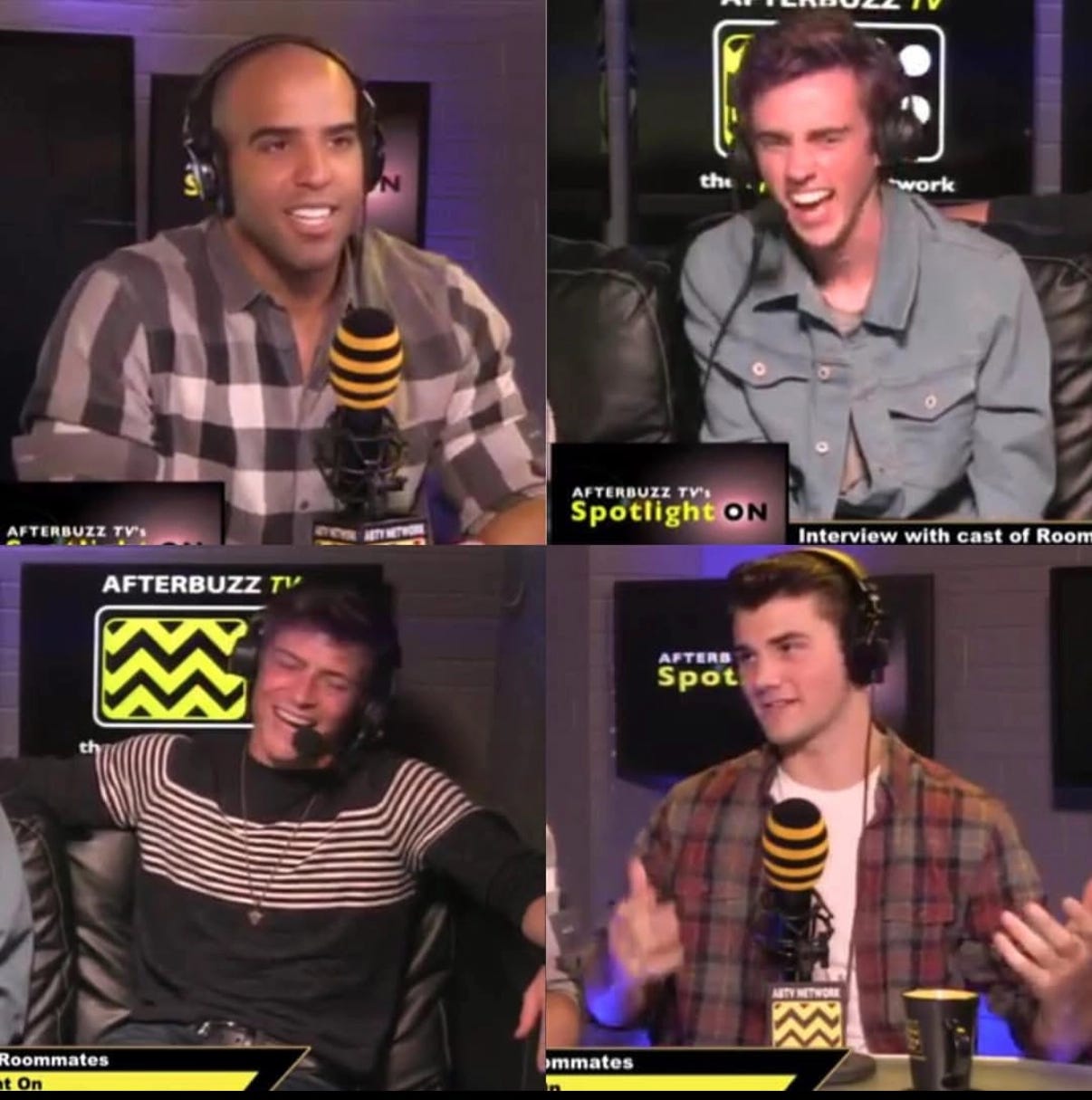
Looking back, Roommates feels like an early creator-economy play. You wrote and starred in a scripted comedy series that lived on YouTube before creators were building businesses around their own audiences. Did you see a bigger shift happening?
I’d love to tell you we saw the whole creator economy coming and got ahead of it on purpose. Some of that was planning. A lot of it was blind faith and a good amount of naivety.
There’s a piece of advice that’s stayed with me ever since I heard it. Mark and Jay Duplass were speaking at South by Southwest, and their whole message was basically: stop waiting for someone else’s permission. Make your own stuff. It’ll be bad. The next one will be a little better. Just keep going.
Roommates came together around 2016, 2017, when YouTube wasn’t yet a place people associated with “a show.” We had a hunch there was something there, and that we’d retain more creative control building it ourselves than going through a traditional studio path. That was the mentality. The stuff we actually cared about, writing our own characters, being funny on our own terms, happened to line up with the one lane that was open to us.
Along the way, I also picked up something from Mark Ruffalo. He said that it takes roughly a hundred auditions to get a job. I’m like, okay, that’s just a volume play then. If that’s the ratio, the only lever I can control is volume. Roommates was my way of putting that into practice. I’d rather make forty bad episodes of something we built ourselves than wait around for two perfectly written auditions a year.
Today you also spend your time helping athletes navigate their careers. What’s the thesis behind that work?
If there’s a thread connecting everything in my career, football, the auditions, my roles, all of it, it’s that failure became useful to me once I stopped scoring it against what other people thought. At some point it just became more about what I actually learned from trying the thing.
For most of my life, I was performing for people who didn’t even have my phone number. What will they think was all I thought about, and half the time I couldn’t even say who “they” were. People who couldn’t reach me if something happened, good or bad, somehow lived rent-free in my head.
“If I tried something and failed, at least I’d know. Never finding out is the actual regret.”
It took me a long time, close to thirty years, to realize that an identity built entirely on performance is a liability.
That’s the whole idea behind my work today. I help college athletes work through the same stuff I never had help with. We’re talking to a dozen schools in Texas this year, with the goal of eventually reaching all fifty states. There are a lot of people around college athletes for the wrong reasons these days, especially with NIL money in the mix. Some are there for the trips, the perks, the gifts. Very few of them are actually in your corner, helping you navigate the ups and downs.
I tell these kids the same thing I had to figure out myself. You treat failure as part of the process, and put in the reps until nobody in the room can say anything that shakes you. Get to the point where you can look at any room and say, nah, I’ve done this and failed two hundred times, nothing you say is gonna shake me. Not because you’re arrogant. Because you put in the reps, and you were harder on yourself than anyone could ever be.
It’s tempting to tell Matt’s story as one about an athlete who became an actor. After talking to him, that feels like the least interesting part. What stayed with me wasn’t the unconventional career path, but the mindset that made it possible. He approached uncertainty the way founders build companies - treating rejection as feedback, iteration as progress, and success as the byproduct of staying in the game long enough for the odds to tilt in his favor.
These days, most of that mindset goes into his work with professional and college athletes. To keep up with what he’s building, you can find him on LinkedIn, Instagram, or at his website.
Check out more stories here:


Realest piece I've read in a while... The part about athletes being surrounded by people who aren’t necessarily in their corner is so true. With NIL there’s a lot of noise around these guys
So many good nuggets in here. The volume point is on point. If you know the odds are 1 in 100, the answer isn’t necessarily to get better at predicting the one, it’s to keep taking shots. Great read