
Horizon · Aug 2026
First-person stories from athletes building their next chapter.
By Kotaro Umeda. Edited by Allen Lee.
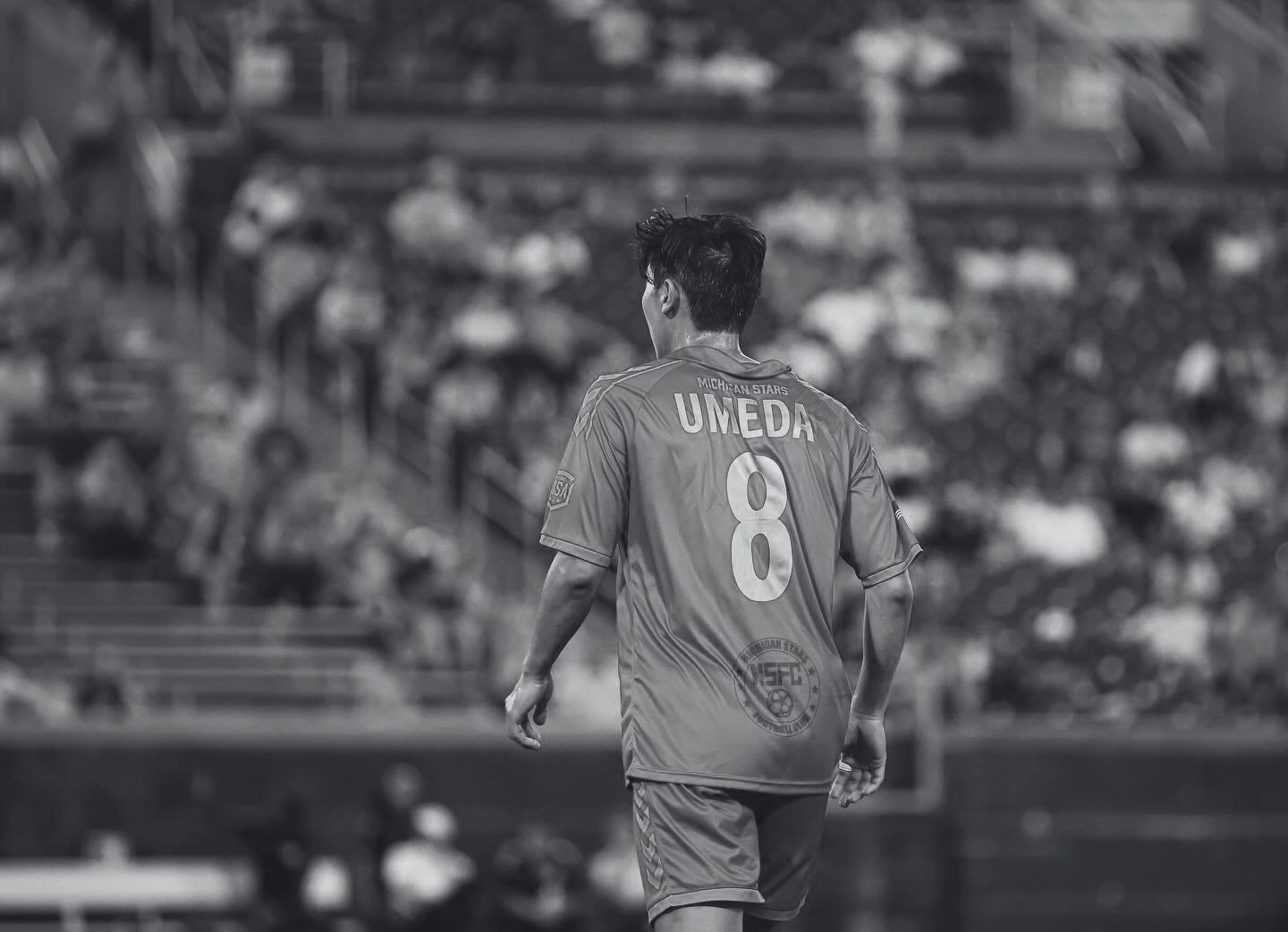
Chink.
That’s the first word I ever looked up.
I was 10 years old. Nobody explained it to me. They just kept saying it. I still remember the feeling. Not anger. Not even sadness. Just confusion.
Growing up, I was usually the only Japanese kid in the room - classrooms, locker rooms, birthday parties.
I learned English through Lil Wayne. I had Tha Carter III and Tha Carter IV on repeat after school, trying to figure out what “real G’s move in silence like lasagna” actually meant.
Then summer came, and I’d go back to Japan. Except my Japanese wasn’t Japanese enough, so they’d treat me like a foreigner there too.
In Japan, I was the American kid. In America, I was the Japanese kid.
I knew I was different before I had a word for it.
“Where are you from?” was the question I dreaded most. I never felt like I had a good answer. And for a long time I thought that meant I didn’t belong anywhere.
Back then, different felt like a wall between me and everyone else. I didn’t know it would eventually become the thing I relied on most.


For most of my life, soccer was the only world I knew. It was the first place I learned that being different didn’t always mean being the person everyone noticed. Sometimes it meant noticing what everyone else missed.
I was never the flashiest player on the field. I was more interested in seeing something before everyone else did - reading patterns, anticipating situations, and understanding where the game was about to go.
From the age of 6 until I was 27, my job was incredibly specific. Sit in pockets in front of the two center backs and connect with my 10, 7, 11, or 9, and if none of that was on, maintain possession of the ball.
To someone watching from the outside, it probably looked simple. But it required me to constantly read what was happening before it happened - the space opening up, the movement of a teammate, the smallest shift in a defender’s body.
Then in 2025, I retired from professional soccer, and suddenly, the thing that had defined my life for two decades was gone. I remember realizing I would never again need to know exactly where to stand relative to a center back. Strangely, I didn’t feel sad. I felt free.
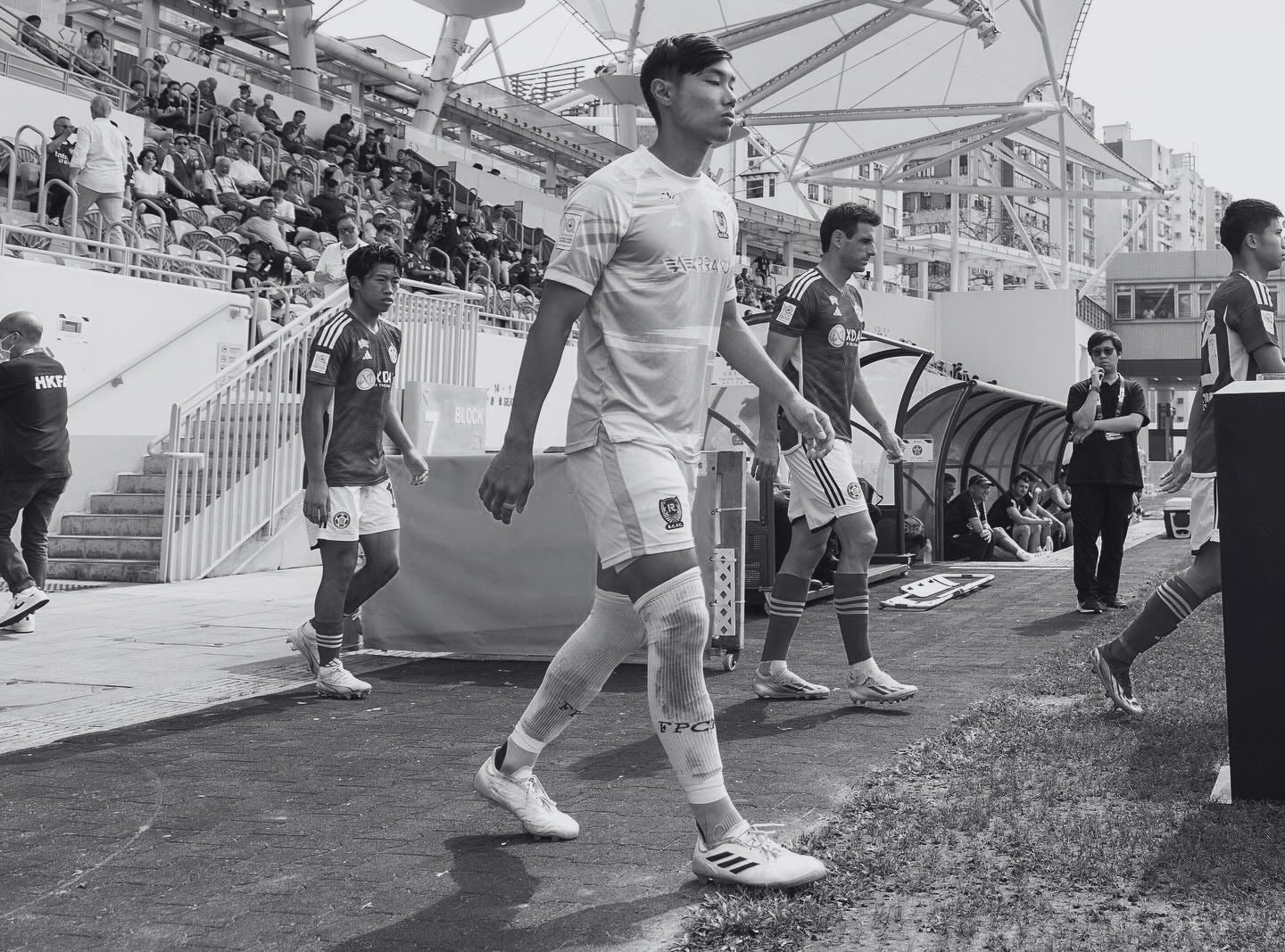
I never planned on getting into the fashion industry. It found me.
During my second year in the league, I was walking through Porto on an off day when a scout approached me and asked if I would come to a casting. I didn’t think much of it. At the time, it was just a way to make some extra money.
At first, I thought modeling was simple. I just needed to stand there, look good, and get paid. But I was wrong. I found out quickly that it’s another way of telling a story. You have a few seconds to communicate something through your face, your posture, your movement, the way you wear something. There’s nowhere to hide the way there is on the pitch, where you can blend into a system, into ten other guys.
In front of a camera, it’s just you. And that was uncomfortable.
I went from locker rooms filled with people who had spent their entire lives chasing the same dream, to studios filled with people who had never watched me play. Nobody asked about my stats. Nobody cared which leagues I had played in or what clubs I had played for. I had to figure out what else I brought to the industry.
The answer was something I’d spent years trying to overcome.
I was different.
Except this time, that wasn’t a problem to solve. It was the reason I was there.
The casting directors weren’t looking for someone who already belonged in that world. They wanted someone shaped by different cultures who could communicate with an audience in a way nobody else in the room could.


At first, soccer and fashion couldn’t look more different. One happens under stadium lights, measured in goals and wins. The other happens in studios and showrooms, measured by something harder to define - taste, emotion, a feeling nobody can quite explain.
During those years, my life became an odd combination of match days and castings. I never thought the two worlds had much to do with each other. But the more time I spent moving between them, the more familiar they started to feel.
The best people in both worlds had the same obsession. They noticed the smallest details that everyone else overlooked.
On the pitch, that meant reading a defender’s hesitation before it turned into a gap. In a studio, it was a creative director arguing for twenty minutes over a sleeve length, whether a shirt should be tucked or untucked, or a shade of blue that was almost right but not quite. From the outside, those details can look insignificant. But I’ve learned that the smallest details are usually where the biggest differences are created.
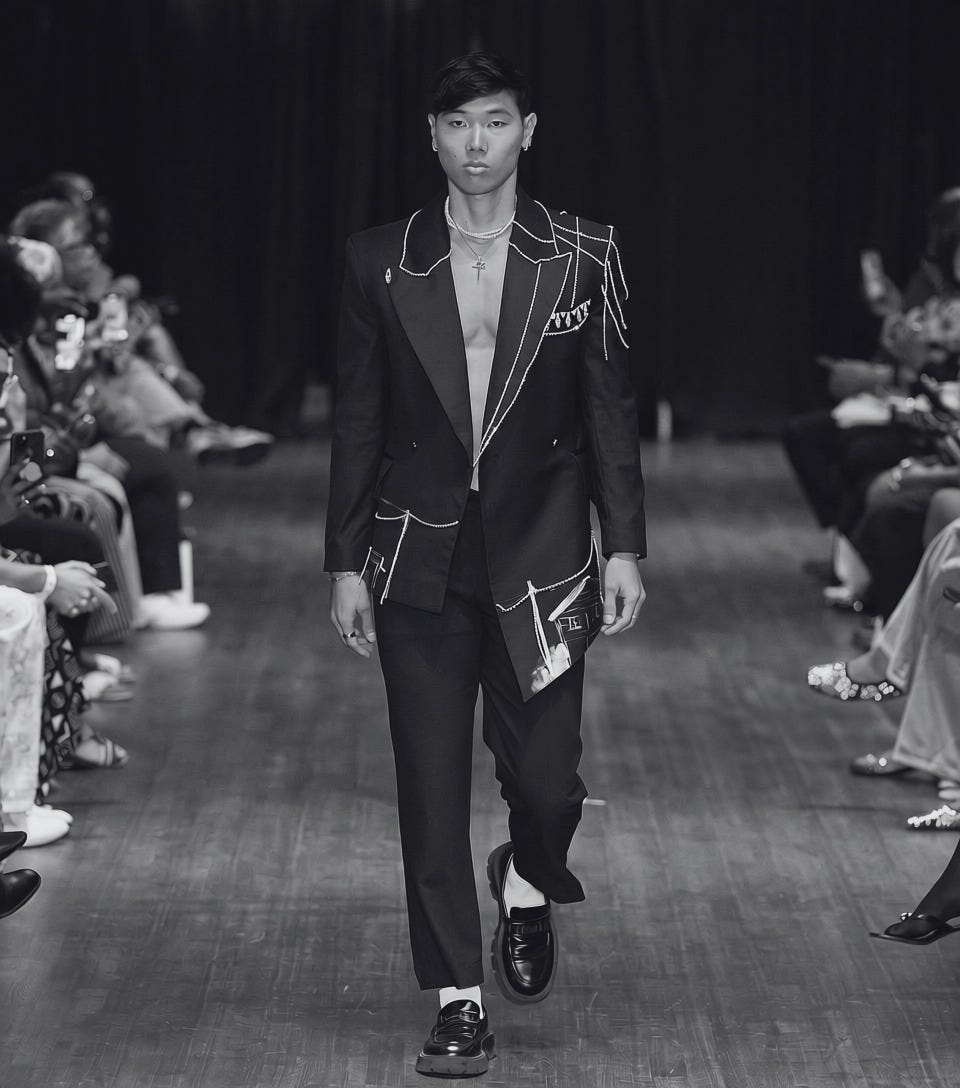
I felt that most clearly the first time I walked a runway at New York Fashion Week in 2025. I didn’t know the designer had spent over a year planning that one hour. I didn’t know even the seating was engineered - certain people in certain seats, so photographers could catch the clothes and the celebrity in the same frame.
Fifteen minutes on a runway, built on a year nobody in the audience ever saw.
Over time, I realized they were changing the way I understood storytelling itself.
Soccer taught me to think in cause and effect. One run created the next chance. One decision changed everything that came after it. Fashion showed me a story could live in a color, a silhouette, or the way someone moved. Sometimes it was one frame, caught a half-second too early or too late, and either way changed the whole feeling of the shot.
The best storytellers weren’t always trying to explain something. They made you feel something first. The meaning came later.
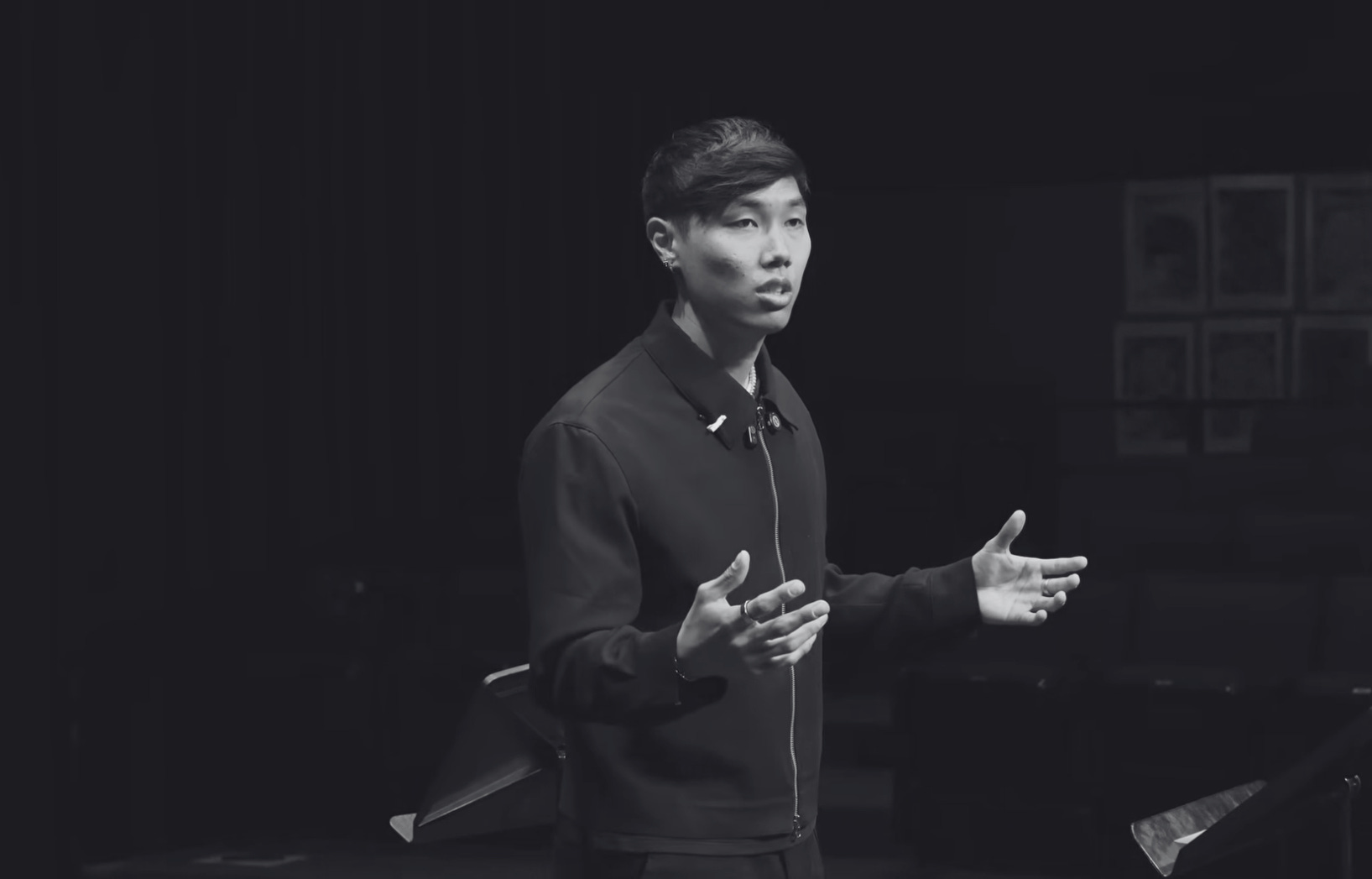
Today, speaking has become the place where all of those experiences come together.
After one of my recent speaking engagements, a young Asian student waited until everyone else had left before walking over to me.
Before he said a word, I knew something was wrong. I couldn’t have told you exactly why. Maybe it was the way he avoided eye contact. Maybe it was his body language. I didn’t ask. I just waited with him.
Then he said it.
“I wanted to attempt suicide.”
He told me he was one of the only Asian students at his school. He talked about the bullying, the racial slurs, and how different he felt every day - like there was no version of himself that fit anywhere.
I didn’t have the perfect answer for him. And I couldn’t erase what he had been carrying or tell him everything would suddenly be easy. I just sat with him. I told him I knew the feeling of walking into a room and wondering why you didn’t fit. We talked for a while after that. Before he left, I made sure he had someone he could call and gave him a way to reach me too.
For years, I thought being different was the thing I had to overcome. Sitting across from him, I understood it had become the one thing only I could have brought to that conversation. I didn’t need him to explain what it felt like to be different. I knew that feeling before he ever found the words.
Maybe that’s what all those years were preparing me for. Learning to notice what people weren’t saying. Learning to understand what couldn’t always be explained with words.
The same thing that once made me feel like I didn’t belong had become the way I understood people who felt like they didn’t either.
I think about that ten-year-old kid in Cleveland sometimes. The one who spent years wondering how to answer the question, “Where are you from?”
Wrong question, it turns out.
I spent years trying to figure out where I belonged. Looking back, maybe I was never supposed to belong to just one place.
Every world I entered asked something different of me. America. Japan. Soccer. Fashion. Speaking. I spent so much of my life trying to become enough of one thing that I almost missed what all those worlds had given me.
I spent years trying to become less different. Now I realize that difference was the thing I was always meant to bring.
I’m different.
Kotaro

Kotaro is a former professional soccer player who has played in Campeonato de Brasil, Campeonato de Portugal, United Soccer League, and the Hong Kong Premier League. Today, he's a keynote speaker, author, and fashion model. To keep up with Kotaro, follow him on LinkedIn and Instagram.
Check out more stories here:


The most fulfilling careers usually aren’t linear. Love this piece
Beautifully written, thanks for sharing.